I applaud your ambition to undertake a home improvement tiling job! Self-installation on floors and walls requires patience, skill, and experience. Moreover, a successful outcome hinges on picking a suitable tile underlayment.
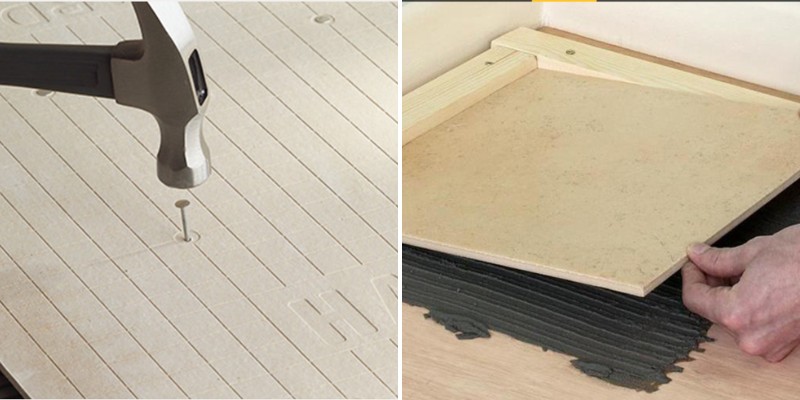
Two possible options for tile substrate are cement board and plywood. Each one has distinct properties to consider, including:
- durability
- moisture resistance
- load-bearing capacity
- adhesiveness
- ease of installation
Among cement board brands, HardieBacker is popular and top-rated, which is why I feature it in this post.
Here we’ll compare HardieBacker vs Plywood in order for you to discover which material is best for your purposes.
Plywood
Construction
Plywood is a composite engineered wood made of several layers of veneer called “plies.” Here’s how it’s produced.
- Manufacturers peel timber into thin strips, then glue them together, creating plies.
- Next, they position each ply with its grain at a right angle to the adjacent layer. This perpendicular orientation creates a cross-grain pattern, adding strength to the finished material.
- The plies undergo heat and pressure, forming flat panels.
Plywood timber can be hardwood, softwood, or a combination of both. All three types complement tile when chemically treated to resist moisture.
Sheet Sizes
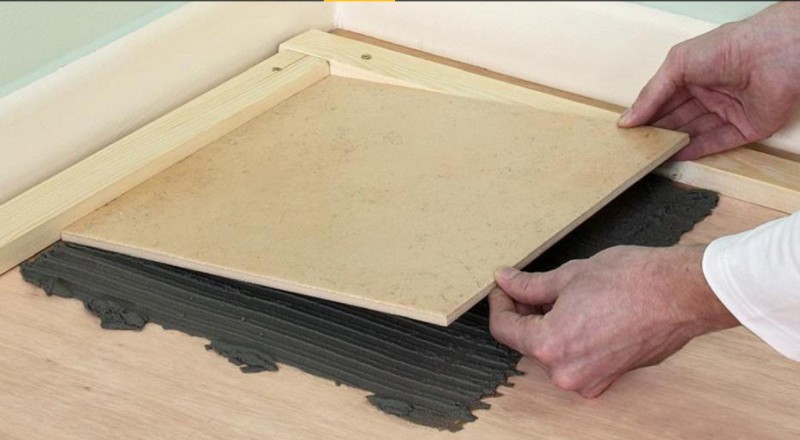
Typically, home improvement stores sell plywood underlayment in panels measuring 4 x 8 feet. The thicknesses commonly available are ¼ inch, ½ inch, and ¾ inch.
Pros Of Plywood
Durability
Plywood is resilient, enduring hard impacts without breaking. Thus, it can stand up to heavy foot traffic.
Strength
The more layers plywood has, the greater its strength. For tile underlayment, plywood should be at least ¾-inch or three plies thick.
Heat and Fire Resistance
Plywood naturally defies damage from heat. For fire resistance, choose fire-treated plywood, having fire retardants that hinder the spread of flames.
Easy Installation
Since plywood is lightweight and flexible, you can haul and lay it without assistance. So, consider plywood if you prefer working solo.
Inexpensive
Plywood comes in four grades, A through D, reflecting the wood’s appearance and structural integrity. Since Grade A plywood is almost free of defects, it has the best durability and longevity.
While it costs the most, Grade A plywood is still affordable.
Can Be Warrantied for Use with Tile
Some manufacturers specifically design their plywood for tile underlayment, guaranteeing its durability. For instance, Patriot Timber warranties its SurePly and IronPly substrates.
According to the company, these two products are compatible with vinyl and ceramic tiles. Since the underlayments have smooth surfaces, they promote sound adhesion.
Similarly, Multiply warranties its plywood as an underlayment for ceramic and vinyl tiles. When properly installed, Multiply pledges that its plywood won’t crack, split, warp, or buckle.
Cons Of Plywood
Doesn’t Saw Cleanly
Plywood tends to splinter, chip, and crack when sawed, yielding jagged edges. Thus, the sheets can be difficult to handle. Moreover, cutting plywood is messy, producing lots of sawdust and debris.
Uneven Surface
Since plywood has a rough texture, it creates a slightly uneven surface for tile. Moreover, if the edges chip when you saw them, the panels don’t align smoothly.
Subpar Moisture Resistance
Even chemically treated plywood isn’t 100 percent waterproof. Hence, the material can absorb moisture, making it swell initially. Then, as plywood dries, it contracts.
Such vacillating movement causes tile grout to crumble and crack. In turn, tiles installed over plywood can loosen in a moist environment.
Mediocre Adhesion
Furthermore, thin-set mortars don’t stick well to plywood. Poor adhesion poses the risk of a failed tiling project.
To improve bonding, place an underlayment membrane between the plywood and tile.
Risky for Wall Application
Heavy tiles such as slate don’t adhere well to plywood. Neither do onyx, glass, and other translucent tiles. In these cases, plywood doesn’t suit wall installations.
Final Assessment of Plywood
Plywood is lightweight and flexible, making it easy to transport. Still, plywood tends to splinter, chip, and crack when sawed, creating jagged edges. Thus, handling and aligning the panels can be challenging.
When plywood is subject to moisture, it expands. Then, it contracts while drying, causing adhesives and grout to fail. In turn, tiles can dislodge over time. So, plywood needs chemical treatment to resist moisture damage.
Even then, treated plywood isn’t 100 percent waterproof. For maximum adhesion, place an underlayment membrane between the plywood and tiles.
Also, for the most longevity, choose Grade A or B plywood. Both these types have sanded, smooth surfaces. Conversely, Grades C and D aren’t sanded and may have patched or filled defects, including knot holes.
High-grade, treated plywood can last 30 years or more. Some manufacturers guarantee plywood durability with vinyl and ceramic tiles. For instance, Multiply and Patriot Timber offer such warranties.
HardieBacker Cement Board
HardieBacker is an award-winning substrate praised by Tile Magazine. In contractor surveys, one-third of the responders prefer HardieBacker cement board for its:
- quality
- reliability
- durability
- availability
- ease of installation
The following information applies to the HardieBacker brand, except where I speak of cement board in general.
Construction
This tile substrate consists of 90 percent Portland cement, sand, and proprietary reinforcements. James Hardie Industries produces it. Here’s the process of making HardieBacker cement board.
- The manufacturer combines the components, pouring them into molds.
- Next, the cement mixture is allowed to cure and dry.
- The panels are pressed, stacked into sheets, and trimmed.
Panel Sizes
Generally, home improvement stores sell Hardiebacker cement board in 3-foot x 5-foot panels. Available thicknesses are ¼ inch, 0.42 inch, and ½ inch.
Pros Of Hardie Backer Cement Board
Strong and Durable
The reinforcing components in this cement board impart excellent durability. Additionally, pressure treating the materials imbues cement board with structural integrity. For this reason, it can bear heavy loads, giving wall and floor tiles sound support.
Waterproof
Most cement boards are water-resistant, not waterproof. Thus, they require coverage with a waterproof membrane, sealing all the corners, screws, and seams, especially when used on a shower wall.
The exception is Hardiebacker cement board with Hydrodefense technology. With this brand, the manufacturer pre-treats the boards with waterproofing elements. So, the board surfaces don’t need a moisture barrier. Still, you must waterproof the screws and joints.
Simple to Trim
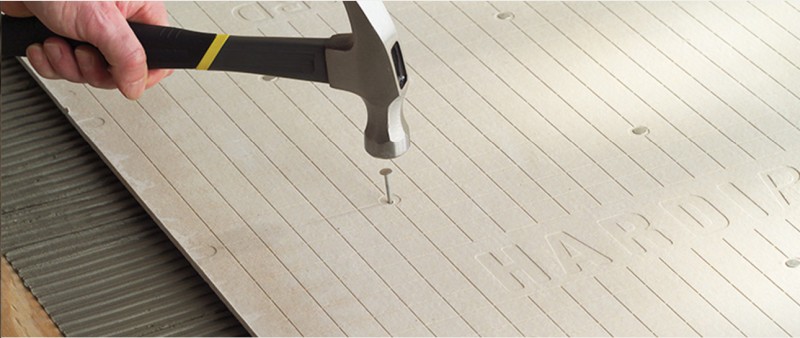
Due to the 1-inch x 1-inch grids on the sheets, measuring is a breeze! Just score and snap each panel with a hand tool, such as a utility knife.
Then, since the boards have smooth surfaces, you can cut them easily and cleanly with minimal debris. This is due to the absence of glass in Hardiebacker cement board, unlike many other brands.
Rigid Structure
Cement board doesn’t shift or flex after you install it, helping to keep grout intact. In turn, tiles are less likely to dislodge.
Great Adhesion
Cement board is specifically made for thin-set mortars, optimizing their adhesion. Hence, it promotes tile stability.
Fire-Resistant
All the components in cement board are non-flammable. Moreover, they often contain fire retardants.
Superb Longevity
You can expect HardieBacker cement board to last at least 50 years. Accordingly, manufacturers’ warranties are extensive.
Cons Of Hardie Backer Cement Board
Cumbersome to Handle
HardieBacker cement boards are hefty. A 3-foot x 5-foot x 0.42-inch panel weighs 39 lbs. Moreover, the sheets are rigid. So, to avoid a hernia injury, enlist a partner to share the load.
Moderately Costly
Cement board is expensive due to its exceptional quality and reliability. For example, at Lowe’s, you’ll pay $16.44 for a Hardiebacker cement board panel measuring 3 feet x 5 feet x 1/2 inch.
Final Assessment Of Cement Board
Cement board has robust strength and durability. Meanwhile, the HardieBacker brand is unique for being waterproof.
Additionally, it’s easy to score and cut, producing little debris. Since cement board doesn’t move after installation, it’s a stable foundation for grout and tiles.
On the other hand, cement board is hefty and rigid. You’ll definitely want a partner to help you install it.
While cement board is costly, it’s worth the investment, lasting at least 50 years.
Comparison Of HardieBacker Cement Board VS. Plywood
Durability
Generally, cement board outperforms plywood in constancy. That’s because it’s smooth, stiff, and stable in moist and humid settings.
Some manufacturers guarantee plywood durability for tile underlayment. For example, Multiply and Patriot Timber warranty their products for use with vinyl and ceramic tiles.
Weight
Plywood is light enough for you to install independently. Conversely, cement board is quite heavy, requiring two people to maneuver it. Additionally, cement board has sharp edges. So, be sure that you and your partner wear gloves.
Flexibility
Since cement board is rigid, it provides a firm foundation for tile. On the other hand, the flexibility of plywood makes it easier to manipulate.
Moisture Resistance
Hardiebacker cement board is 100 percent waterproof throughout. Thus, you don’t need to apply a waterproof coating to the board surfaces.
Moreover, HardieBacker cement board has patented technology to resist mold and mildew. This feature makes it ideal for floors and walls subject to water and humidity.
Meanwhile, treated plywood has fair moisture resistance. Hence, it complements tiles that stay relatively dry.
Heat and Fire Resistance
Cement board weathers heat better than plywood. Both fire-treated plywood and cement board contain fire retardants, chemicals that quench flames.
Workability
Cement board is a piece of cake to measure, score, and trim to size. Moreover, it cuts cleanly, producing scant debris. To cut cement board, use a scoring knife, shears, or utility knife.
Due to plywood’s cross-grain pattern, it can splinter and chip during sawing. Additionally, cutting plywood yields substantial sawdust.
Thus, cement board exceeds plywood in workability.
Adhesiveness
HardieBacker cement board is the champion in this category! Its smooth surface ensures strong adhesion whether you install it on a floor or wall.
Due to plywood’s rough texture, it tends to have mediocre adhesion. The exception is plywood warrantied as a tile underlayment.
Load-Bearing Capacity
Cement board can handle more weight than plywood. For this reason, it’s better for vertical tile applications, such as walls.
Ease of Installation
Here’s where plywood has the advantage. Since the panels are lightweight and flexible, they’re easier to maneuver than cement board. Thus, you can install plywood independently.
Longevity
As cement board lasts for 50+ years, it far exceeds plywood in longevity. By comparison, treated plywood has a lifespan of at least 30 years.
Cost
Plywood is less expensive than Hardiebacker cement board. The price of treated plywood varies considerably, depending on these factors:
- type of wood
- plywood grade
- panel size and thickness
- supplier
For top quality, I recommend Grade A plywood ¾-inch thick. Shop at a few home improvement stores, comparing prices. To save yourself time and legwork, research online rather than visiting brick-and-mortar retailers.
Note that Hardiebacker cement board comes in both water-resistant and waterproof panels. So, look for sheets with Hydrodefense and MoldBlock technologies. These patents ensure that the boards are waterproof.
Best Uses For Plywood And HardieBacker
Plywood
As a tile substrate, plywood is most compatible with floor tiles. That’s because it lacks the adhesion and load-bearing strength to keep wall tiles secure. Typically, using plywood underlayment on a wall can result in tile dislodgement.
If you aim to tile a bathroom floor, choose plywood that’s chemically treated for moisture resistance. Then, for maximal adhesion, place an underlayment membrane between the tiles and plywood.
Do you intend to install ceramic or vinyl tile? If so, consider a manufacturer that warranties their plywood for durability. Examples are Multiply and Patriot Timber.
Hardiebacker Cement Board
This brand is ideal for both floors and walls, especially those subject to moisture. The only drawbacks are its weight and cost.
Still, you’ll find Hardiebacker cement board easy to install with a partner. Plus, you’ll recoup your initial outlay of money with time. Cement board lasts at least 50 years. So, if you can afford it, your investment will be worth the expense in the long run.
Fabulous Outcome
Plywood is an affordable tile underlayment best suited to floors. Chemically treated plywood has the highest moisture resistance. Still, over time, contact with water and moist air can damage plywood.
Thus, use this material for tiling floors that will stay relatively dry. In that case, plywood underlayment can last 30 years or more.
Meanwhile, Hardiebacker cement board complements both horizontal and vertical installations. It’s waterproof with a high load-bearing capacity.
Whether you use cement board for tiling walls or floors, it provides a stable foundation. While you’ll pay more for cement board than plywood, it can provide 50 years of service.
Whichever material you choose to install, may your results be fabulous!
Related Posts
- 6 Great Alternatives to HardieBacker Cement Board
- Comparison of WonderBoard vs GoBoard Used as Tile Backer Boards
- How Much Does it Cost to Furnish a House – Living Room,Bedroom,Kitchen etc
- 5 Benefits of Spray Foam Insulation During Summer
- Here are Some Plumbing Installation Tips For your New Home
- 15 Stores Like Home Depot for Your Home Projects (Great Alternatives)

Leave a Reply